Understanding Ring Size: A Comprehensive Guide
Navigating the world of jewelry requires knowing your precise ring size, ensuring both comfort and style. This guide simplifies the process, eliminating guesswork and potential mishaps.
Why Accurate Ring Measurement Matters
Determining the correct ring size is paramount for a satisfying jewelry experience. A properly fitted ring feels comfortable, allowing for natural finger movement without constriction or spinning. Ill-fitting rings can lead to discomfort, hindering daily activities and potentially causing irritation.
Beyond comfort, accurate sizing significantly impacts the ring’s aesthetic appeal. A loose ring risks accidental loss, a devastating outcome for cherished pieces, especially engagement or wedding bands. Conversely, a ring that’s too tight can appear awkward and may be difficult to remove in emergency situations.
Investing in jewelry is a significant decision; precise measurement ensures your investment fits perfectly, maximizing enjoyment and minimizing the chances of costly resizing or replacements. Don’t underestimate the importance of getting it right from the start!
The Impact of Ring Size on Comfort and Style
Ring size profoundly influences both how a ring feels and how it looks on your hand. A ring that’s too snug can cause discomfort, restricting blood flow and creating a persistent, irritating pressure. This impacts daily life, making simple tasks unpleasant.
Stylistically, an ill-fitting ring detracts from its overall beauty. A loose ring constantly shifts, diminishing its sparkle and elegance. It can also appear disproportionate to the finger, disrupting the intended aesthetic balance. A tight ring, conversely, can distort the finger’s shape, making it appear shorter or wider.
The ideal fit allows the ring to glide smoothly over the knuckle while sitting comfortably at the base of the finger, showcasing its design without compromise. Prioritizing accurate sizing ensures both lasting comfort and enduring style.
Methods for Measuring Ring Size
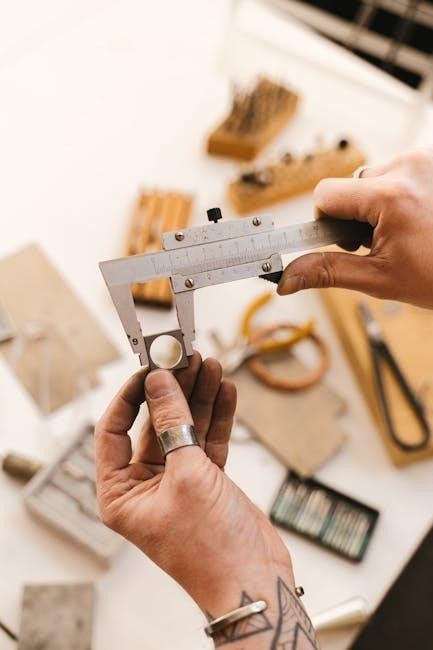
Several techniques exist for determining your ring size, ranging from utilizing specialized tools to employing simple household items for a precise fit.
Using a Ring Sizer
A ring sizer is arguably the most accurate method for determining your ring size, offering a straightforward and reliable approach. These tools, often available at jewelry stores or online, consist of a band with various ring sizes marked along its length.
To use a ring sizer effectively, simply slip it onto your finger, ensuring a comfortable yet snug fit – not too tight, and not so loose that it easily slides off. The size indicated where the sizer feels secure is your ring size. Many sizers are adjustable, allowing for fine-tuning.
For the best results, measure your ring size at the end of the day, as fingers tend to swell slightly throughout the day. Consider purchasing a plastic ring sizer for repeated use, or a disposable paper version for a one-time measurement. This method minimizes errors and provides confidence when purchasing rings, especially online.
The Paper Ring Method
If a ring sizer isn’t readily available, the paper ring method provides a convenient, albeit slightly less precise, alternative for determining your ring size. This DIY approach utilizes a strip of paper to mimic the circumference of your finger.
Begin by cutting a thin strip of paper, approximately 5-6 inches long and no more than half an inch wide. Wrap the paper snugly around the base of the finger you intend to wear the ring on, ensuring it’s not too tight. Mark the point where the paper overlaps with a pen or marker.
Remove the paper and measure the length from the starting end to the marked point in millimeters. Compare this measurement to a ring size chart (available online) to find your corresponding ring size. Remember to measure multiple times for accuracy, and consider the ring’s width when interpreting the results.
Measuring with String or Floss
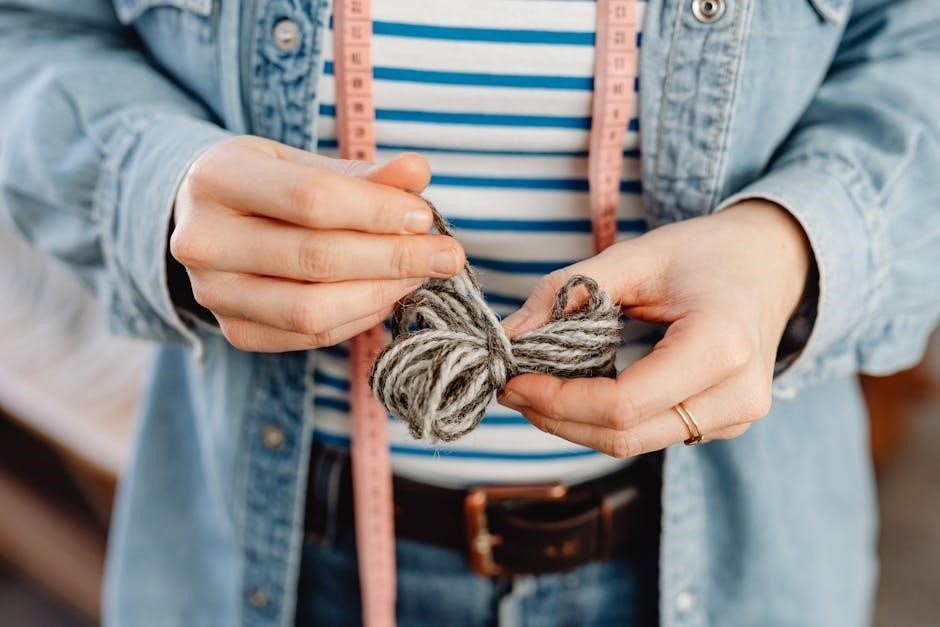
Similar to the paper ring method, utilizing string or floss offers a readily accessible way to estimate your ring size, particularly useful when a dedicated ring sizer isn’t on hand. This technique relies on the flexibility of these materials to conform to your finger’s shape.
Take a piece of string or floss – avoid stretchy materials. Wrap it snugly around the base of your finger, ensuring a comfortable but firm fit. Mark the point where the string overlaps with a pen. Remove the string and measure its length in millimeters using a ruler.
Consult a ring size chart online, matching your measured length to the corresponding ring size. For enhanced accuracy, repeat the process several times. Keep in mind that the width of the intended ring can influence the fit, so factor that into your final determination.
Professional Measurement at a Jeweler
For the most accurate ring size determination, a visit to a professional jeweler is highly recommended. Jewelers possess specialized tools, like ring mandrels, and expertise to precisely measure your finger, accounting for individual variations and ensuring a perfect fit.
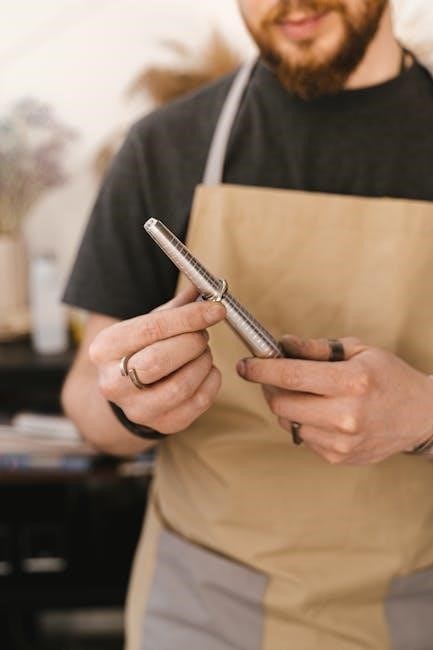
During a professional measurement, the jeweler will typically use a ring mandrel – a tapered metal tool marked with ring sizes. Your finger will be measured multiple times to confirm consistency. They can also assess your knuckle size and recommend adjustments if necessary.
This method is particularly valuable when purchasing significant pieces like engagement rings, where accuracy is paramount. Jewelers can also advise on the ideal ring style and width for your finger shape, guaranteeing both comfort and aesthetic appeal. Don’t hesitate to leverage their professional guidance!
Ring Size Charts & Conversions
Standardized charts translate finger circumference into corresponding ring sizes, varying by country. Accurate conversions between US, UK, and European sizes are readily available online.
US Ring Size Chart
The US ring size chart is a fundamental tool for determining the correct fit, utilizing a numerical scale from size 3 to 15 (and beyond in half sizes). Each size corresponds to a specific inner circumference of the ring. Size 3 typically measures 44.5mm in circumference, while size 15 reaches 74.2mm.

Understanding this chart is crucial, especially when purchasing rings online where trying them on isn’t possible. Most jewelers and online retailers provide detailed charts, often accompanied by printable measuring guides. It’s important to note that these charts are standardized, but slight variations can occur between manufacturers.
For accurate results, measure your finger multiple times throughout the day, as finger size fluctuates. Referencing a reliable US ring size chart ensures a comfortable and stylish fit, preventing the frustration of a ring that’s either too tight or too loose. Remember to consider the width of the band, as wider bands often require a slightly larger size.
International Ring Size Conversions (UK, Europe, Japan)
Navigating international ring sizes requires conversion charts, as systems differ significantly from the US standard. The UK ring size system, for example, uses letters (A-Z+) instead of numbers, with A being the smallest and Z+ the largest. European sizing generally aligns with the UK system, though slight variations exist between countries.
Japan employs a unique system based on millimeters, directly correlating to the inner circumference of the ring. Converting between these systems necessitates accurate charts, readily available online from jewelers and retailers. A US size 7, for instance, typically equates to a UK size N, a European size 52, and a Japanese size 15.
Always double-check conversions before making a purchase, as inaccuracies can lead to ill-fitting rings. Utilizing a reliable conversion tool and understanding the nuances of each system ensures a comfortable and stylish fit, regardless of where you’re shopping.
Ring Size Chart for Men vs. Women
Generally, men’s ring sizes differ from women’s due to broader finger structures. Women’s sizes typically range from 3 to 8, with the average being between 6 and 7, while men’s sizes usually start around 8 and go up to 14, with an average of 10 to 11.
However, these are just averages; individual finger sizes vary greatly regardless of gender. Wider bands often require a slightly larger size than narrower bands, as they take up more space on the finger. It’s crucial to measure the finger accurately, rather than relying solely on gender-based assumptions.
Dedicated ring size charts differentiate between men and women, providing more precise guidance. Consider the individual’s hand size and finger shape for a perfect fit, ensuring comfort and preventing the ring from slipping or feeling constricting. Accurate measurement is paramount for both genders.

Factors Affecting Ring Size
Several elements influence ring fit, including daily fluctuations, temperature, and individual anatomy. Knuckle size and finger shape also play a crucial role in accurate sizing.
Time of Day & Temperature
Your finger size isn’t constant; it fluctuates throughout the day! Generally, fingers are slightly smaller in the morning and swell as the day progresses due to increased blood flow and activity. Therefore, the best time to measure your ring size is in the evening, after you’ve been active, as this will provide the most accurate reading for a comfortable fit.
Temperature also significantly impacts finger size. Warm temperatures cause fingers to swell, while cold temperatures cause them to contract. Avoid measuring your ring size immediately after exposure to extreme temperatures – give your hands time to adjust to room temperature first. A ring that fits perfectly on a cold day might feel tight on a warm summer evening, and vice versa. Consider these factors for a consistently comfortable fit.
Knuckle Size Considerations
Many individuals discover their knuckle is larger than the base of their finger. This presents a unique challenge when determining ring size, as a ring must comfortably pass over the knuckle and fit securely on the finger base. Simply measuring the finger base isn’t sufficient; you need to account for the knuckle’s circumference.
If your knuckle is significantly larger, measure it as well. Choose a ring size that allows the ring to slide over the knuckle without resistance, but isn’t so loose that it spins freely on the finger. A slightly larger size might be necessary to accommodate the knuckle, even if it feels a bit roomy at the base. Consider ring styles with thinner bands, as they are more likely to navigate larger knuckles with ease. Prioritize comfort and security!
Finger Shape & Width
The shape and width of your finger can subtly influence the ideal ring size. Fingers aren’t perfectly cylindrical; some taper, while others are more uniform in width. A tapered finger might require a slightly larger size to ensure it doesn’t feel too tight at the base. Conversely, a wider finger might benefit from a slightly smaller size to prevent excessive spinning.
Consider the overall structure of your hand. If you have prominent knuckles or bony structures, these features will impact how a ring feels. Wider bands tend to emphasize finger width, while thinner bands can create a more streamlined appearance. It’s crucial to try on rings of varying widths to understand how they complement your finger’s shape. Don’t hesitate to experiment to find the most flattering and comfortable fit!

Tips for Accurate Measurement
For a precise fit, measure multiple times throughout the day and enlist a friend’s help. Also, account for the ring’s width during the process.
Measuring Multiple Times
Consistency is key when determining your ring size. Fingers can fluctuate in size due to various factors, making a single measurement unreliable. Therefore, it’s highly recommended to measure your finger several times throughout the day. Morning measurements might differ from those taken in the evening, as hands tend to swell slightly.
Take measurements when your hands are at room temperature, as cold temperatures can constrict fingers, leading to a smaller reading. Aim for at least three to five measurements, and then calculate the average. This averaging process helps to minimize errors and provides a more accurate representation of your true ring size. Don’t rush the process; patience yields the best results, ensuring a comfortable and stylish fit for your new jewelry.
Getting Help from a Friend
Accurate ring measurement can be challenging when self-measuring. Enlisting the assistance of a friend or family member can significantly improve accuracy, especially when using methods like string or paper. A second pair of hands ensures the measuring tool is held correctly and snug—but not too tight—around your finger.
Having someone else mark the overlapping point on the string or paper eliminates parallax errors and provides a clearer indication of your finger’s circumference. They can also offer an objective perspective, confirming the measurement feels correct and isn’t overly restrictive. This collaborative approach minimizes the risk of misinterpreting the reading and ultimately leads to a better-fitting ring, enhancing both comfort and the overall aesthetic of your jewelry.
Considering the Ring’s Width
The width of the ring band significantly impacts how it feels and fits on your finger. Wider bands generally require a slightly larger size compared to thinner bands, as they occupy more finger surface area. A narrow ring will comfortably slip onto your finger at your standard size, while a wider band of the same size might feel snug or even tight.
Therefore, when measuring, especially for wider bands (6mm or more), it’s advisable to increase your measured size by a quarter to half a size. This ensures a comfortable fit that doesn’t restrict circulation. Ignoring band width can lead to a ring that’s either too difficult to put on or feels loose and prone to slipping. Prioritizing this detail guarantees a perfect, enjoyable wearing experience.
What to Do If Your Ring Doesn’t Fit
Don’t panic! Rings can often be resized by a professional jeweler, either increasing or decreasing the size for a perfect, comfortable fit.
Resizing Options: Increasing Ring Size
Increasing a ring’s size is a common request, and generally more straightforward than decreasing it. Jewelers typically accomplish this by adding small pieces of metal to the shank – the band of the ring – in a process called inserting. This involves precisely cutting the shank, soldering in the additional metal (often of the same karat and color as the original ring), and then polishing the joint to create a seamless appearance.
For rings made of platinum or gold, the jeweler will use metal matching the ring’s composition to maintain its integrity and value. The location of the cut is carefully considered to avoid disrupting any design elements, like stones or engravings. More complex designs might require more extensive work, potentially impacting the ring’s original finish. It’s crucial to discuss the process and potential alterations with your jeweler beforehand to ensure your satisfaction.
Resizing Options: Decreasing Ring Size
Reducing a ring’s size presents a slightly more complex challenge than increasing it, as it involves removing metal from the shank. Jewelers typically achieve this by cutting a small section of the ring and then soldering the ends back together, creating a smaller circumference. This process requires precision and expertise to maintain the ring’s structural integrity and aesthetic appeal.
The location of the cut is critical; jewelers avoid areas with intricate designs or stones whenever possible. For rings with gemstones set all around the band, the jeweler might need to remove stones, resize the shank, and then reset the stones – adding to the cost and complexity. Platinum rings can be more challenging to resize down due to the metal’s properties. Always discuss the potential impact on the ring’s design and durability with a qualified jeweler before proceeding.
Limitations of Ring Resizing
While resizing offers flexibility, it’s not limitless. Rings with intricate designs, like channel settings or milgrain detailing, may have limited resizing capacity, or the process could compromise the design. Rings constructed from certain metals, such as tungsten or titanium, are often nearly impossible to resize due to their extreme hardness and brittleness.
Furthermore, repeated resizing weakens the metal over time, potentially leading to breakage. There’s a limit to how much a ring can be altered while maintaining its structural integrity. Extremely large adjustments might necessitate creating an entirely new ring, preserving the original stone if possible. Consider these limitations when purchasing; aiming for a close fit initially minimizes the need for extensive resizing and protects your investment.